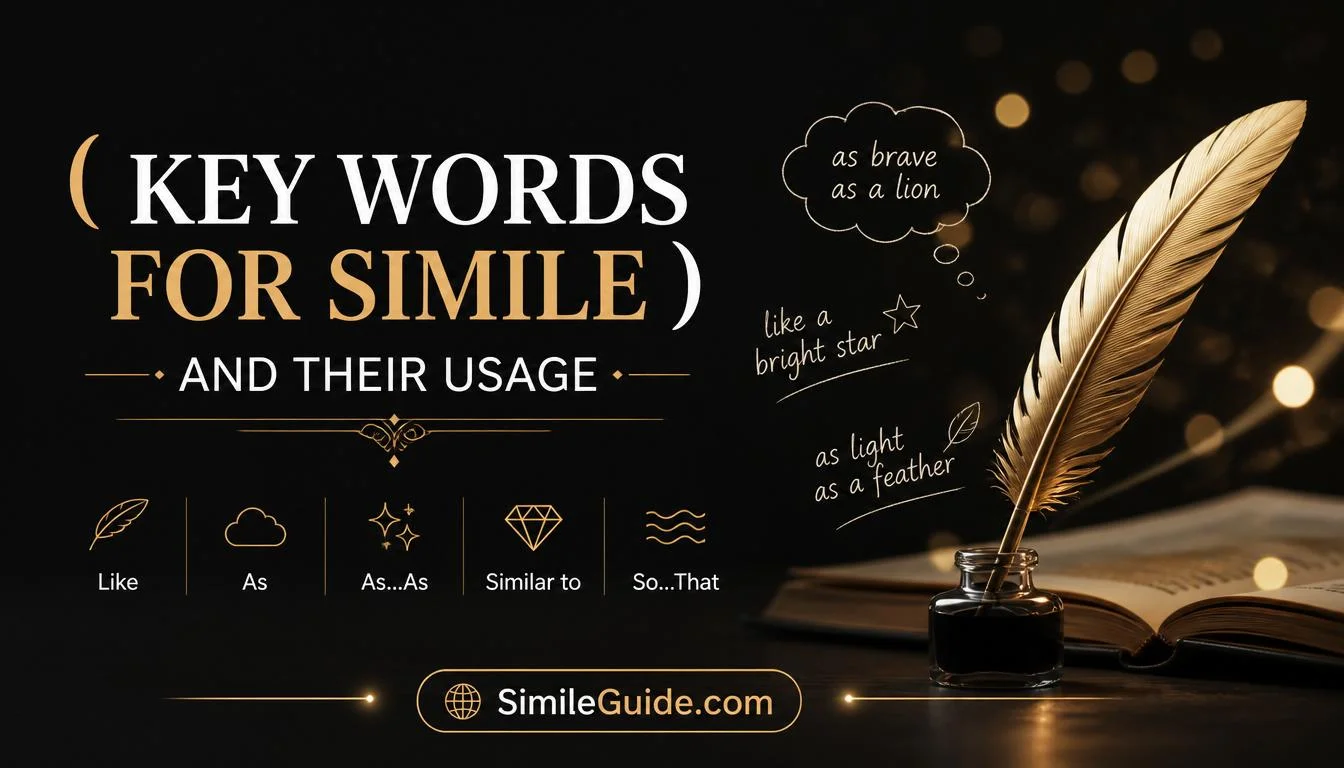
A simile is a figure of speech that compares two different things to make a description more vivid and easier to imagine. The key words for simile are the signal words that show a comparison is being made. In most cases, these words are “like” and “as.” They help readers instantly recognize that the writer is comparing one thing to another for effect rather than stating a literal fact.
Updated for 2026: Whether you’re writing school essays, social media captions, poems, or creative stories, understanding key words for simile can make your writing more engaging and memorable. A well-crafted simile paints a clear picture in the reader’s mind and adds emotion, humor, or emphasis.
In everyday conversations, people often use key words for simile without even realizing it. Phrases like “busy as a bee” or “runs like the wind” are common examples that make speech more colorful.
From real-life writing experience, learning to recognize these signal words is one of the quickest ways to improve descriptive writing. Once you know how they work, creating your own similes becomes much easier.
How Key Words for Simile Work
The key words for simile act as comparison signals. Instead of saying two things are exactly the same, they suggest that one thing is similar to another in a specific way.
The two most common key words are:
- Like
- As
Sometimes, writers also use comparison phrases such as:
- As…as
- Like a
- Like an
- Similar to
- Resembles (used in comparisons but not always considered a classic simile)
- As though
- As if
These words help readers understand that the comparison is imaginative rather than literal.
Why Are These Key Words Important?
Using the right key words can:
- Make descriptions easier to understand.
- Create stronger mental images.
- Add emotion and creativity.
- Improve essays and stories.
- Make poems and captions more memorable.
For example:
- Her smile was like sunshine.
The word like compares a smile to sunshine, suggesting warmth and happiness. - The baby slept as peacefully as a kitten.
The phrase as…as compares the baby’s peaceful sleep with that of a kitten.
Common Key Words Used in Similes
Although like and as are the most recognizable simile words, writers often use several comparison phrases.
| Key Word or Phrase | Purpose | Example |
|---|---|---|
| Like | Direct comparison | He swims like a fish. |
| As | Equal comparison | She is as brave as a lion. |
| As…as | Shows similarity | The snow was as white as cotton. |
| Like a | Descriptive comparison | He fought like a warrior. |
| Like an | Comparison before vowel sounds | She sang like an angel. |
| As if | Imagined comparison | He looked as if he had seen a ghost. |
| As though | Similar imagined comparison | She smiled as though she knew the answer. |
| Similar to | Formal comparison | The design is similar to a butterfly’s wings. |
Remember that like and as remain the strongest and most common key words for simile in English writing.
Examples of Key Words for Simile
Below are practical examples that show how key words for simile work in everyday English. Each example includes its meaning and a short explanation.
1. Busy as a bee
Meaning: Very hardworking.
Example: My mother is as busy as a bee every morning preparing everyone for the day. It highlights how active and energetic she is.
2. Quiet as a mouse
Meaning: Extremely silent.
Example: During the movie, the children were as quiet as a mouse. The simile emphasizes complete silence.
3. Strong as an ox
Meaning: Very powerful.
Example: The worker was as strong as an ox and lifted the heavy boxes with ease. It shows great physical strength.
4. Fast as lightning
Meaning: Extremely fast.
Example: She completed the race as fast as lightning. The comparison stresses incredible speed.
5. Light as a feather
Meaning: Very light in weight.
Example: The scarf felt as light as a feather. It suggests softness and almost no weight.
6. Cold as ice
Meaning: Very cold or emotionally distant.
Example: His hands were as cold as ice after standing outside. The simile describes an icy temperature.
7. White as snow
Meaning: Very white.
Example: Her wedding dress was as white as snow. It creates a clear visual image.
8. Brave as a lion
Meaning: Very courageous.
Example: The firefighter was as brave as a lion during the rescue. The comparison highlights courage.
9. Hungry as a wolf
Meaning: Extremely hungry.
Example: After football practice, I was as hungry as a wolf. It emphasizes a strong appetite.
10. Happy as a child
Meaning: Very joyful.
Example: She looked as happy as a child on her birthday. It conveys genuine excitement.
11. Runs like the wind
Meaning: Runs very quickly.
Example: The athlete runs like the wind during competitions. It compares speed with the movement of the wind.
12. Sleeps like a baby
Meaning: Sleeps deeply and peacefully.
Example: After the long journey, he slept like a baby all night. The simile shows complete rest.
13. Shines like a star
Meaning: Stands out brilliantly.
Example: Her performance shined like a star on stage. It expresses excellence and confidence.
14. Roars like a lion
Meaning: Makes a loud, powerful sound.
Example: The engine roared like a lion when it started. The comparison adds dramatic effect.
15. Floats like a feather
Meaning: Moves gently.
Example: The leaf floated like a feather across the pond. It paints a calm, graceful picture.
How to Create Your Own Similes
Creating a simile is easier than many people think. You simply compare one thing with another using key words for simile, usually like or as, to highlight a shared quality.
Follow these simple steps:
- Choose the subject you want to describe.
- Identify its strongest quality (fast, quiet, bright, happy, etc.).
- Think of something well known for that quality.
- Connect them using like or as.
Examples
- The classroom was as quiet as a library.
This compares the silence in the classroom to the peaceful atmosphere of a library. - Her voice sounded like gentle rain.
The simile creates a soft and calming image. - The laptop was as hot as a frying pan.
It emphasizes how warm the device became after long use. - His ideas spread like wildfire.
This shows that the ideas became popular very quickly. - The phone screen shone like a mirror.
The comparison highlights its brightness and reflection.
Common Mistakes People Make With Key Words for Simile
Even experienced writers sometimes confuse similes with other figures of speech. Avoid these common mistakes.
Using a Metaphor Instead of a Simile
Incorrect: He is a lion.
Correct: He is as brave as a lion.
A metaphor says something is another thing, while a simile uses like or as to compare.
Using Weak Comparisons
Choose comparisons that readers immediately understand.
Weak: Busy as a person.
Better: Busy as a bee.
The second example creates a much stronger image.
Overusing Similes
Adding too many similes in one paragraph can distract readers. Use them only when they improve the description.
Comparing Unrelated Things
A simile should make logical sense.
Confusing: Happy like a calculator.
Better: Happy like a child on a holiday.
Readers should easily understand the shared quality.
Practical Uses of Key Words for Simile
Understanding key words for simile is valuable for students, writers, and anyone who wants to communicate more effectively.
In School Essays
Similes make descriptive writing more interesting.
Example:
- The playground was as lively as a festival.
This helps readers imagine the energetic atmosphere.
In Poetry
Poets use similes to create emotion and vivid imagery.
Example:
- Your laughter is like music in the morning.
The comparison adds warmth and beauty.
In Stories
Authors use similes to help readers visualize characters and settings.
Example:
- The forest was as dark as midnight.
The simile creates suspense.
In Social Media Captions
Modern captions become more engaging with similes.
Examples:
- Smiling like sunshine today.
- Busy as a bee, but loving every minute.
- Shining like a star.
In Everyday Conversations
In everyday conversations, people often use key words for simile to make descriptions clearer and more expressive.
Examples include:
- Cold as ice
- Easy as pie
- Soft as silk
- Sharp as a knife
These familiar expressions make speech sound natural and colorful.
More Examples of Key Words for Simile
Here are additional examples with meanings and explanations.
16. Sweet as honey
Meaning: Very kind or pleasant.
Example: Her words were as sweet as honey, making everyone smile.
17. Soft as silk
Meaning: Extremely smooth.
Example: The blanket felt as soft as silk against my skin.
18. Easy as pie
Meaning: Very simple.
Example: The homework was as easy as pie once I understood the lesson.
19. Sharp as a knife
Meaning: Very intelligent or very sharp.
Example: She is as sharp as a knife when solving puzzles.
20. Fresh as a daisy
Meaning: Looking healthy and energetic.
Example: After a good night’s sleep, he looked as fresh as a daisy.
21. Blind as a bat
Meaning: Unable to see well.
Example: Without my glasses, I’m as blind as a bat.
22. Free as a bird
Meaning: Completely independent.
Example: After finishing the exams, I felt as free as a bird.
23. Cool as a cucumber
Meaning: Calm under pressure.
Example: She stayed as cool as a cucumber during the interview.
24. Dry as a bone
Meaning: Completely dry.
Example: The clothes were as dry as a bone after hours in the sun.
25. Black as coal
Meaning: Very black.
Example: The night sky looked as black as coal before the storm.
26. Bright as the sun
Meaning: Extremely bright.
Example: The stage lights were as bright as the sun.
27. Gentle as a lamb
Meaning: Very gentle.
Example: The puppy was as gentle as a lamb with children.
28. Tough as nails
Meaning: Very strong or resilient.
Example: My grandmother is as tough as nails despite her age.
29. Slow as a snail
Meaning: Extremely slow.
Example: Traffic moved as slow as a snail during rush hour.
30. Calm as the sea at sunrise
Meaning: Very peaceful.
Example: His voice remained as calm as the sea at sunrise, reassuring everyone.
Frequently Asked Questions
What are the main key words for simile?
The two primary key words for simile are like and as. They signal that a comparison is being made between two different things.
Why are key words important in a simile?
They help readers recognize the comparison and create vivid mental images that make writing more engaging.
Can a simile use words other than “like” and “as”?
Yes. Expressions such as as if, as though, like a, and like an can also introduce simile-like comparisons, although like and as remain the most common.
Are similes useful in everyday writing?
Absolutely. They improve essays, stories, poems, speeches, presentations, captions, and even casual conversations by making descriptions more expressive.
How can I get better at writing similes?
Read books, notice similes in everyday language, and practice comparing ordinary objects using like and as. The more you practice, the more natural your comparisons will become.
Conclusion
Learning the key words for simile is one of the simplest ways to make your writing more vivid, descriptive, and engaging. Words such as like and as help compare ideas in a way that readers can easily understand and remember.
From real-life writing experience, mastering similes doesn’t require complicated grammar—just careful observation and a little creativity. Whether you’re a student writing essays, a poet crafting verses, a content creator writing captions, or someone looking to improve everyday communication, similes can make your words more memorable.
Updated for 2026, this guide provides a practical foundation for recognizing, understanding, and creating effective similes. Keep practicing, experiment with new comparisons, and you’ll soon find that your writing becomes more colorful, expressive, and enjoyable to read.
DISCOVER MORE ARTICLES
Time for a Hunt Simile Wrangling Answer Key 2026
What Is the Simile for Cat? Complete Guide 2026
40 Best Simile for Strange Examples with Meanings 2026
