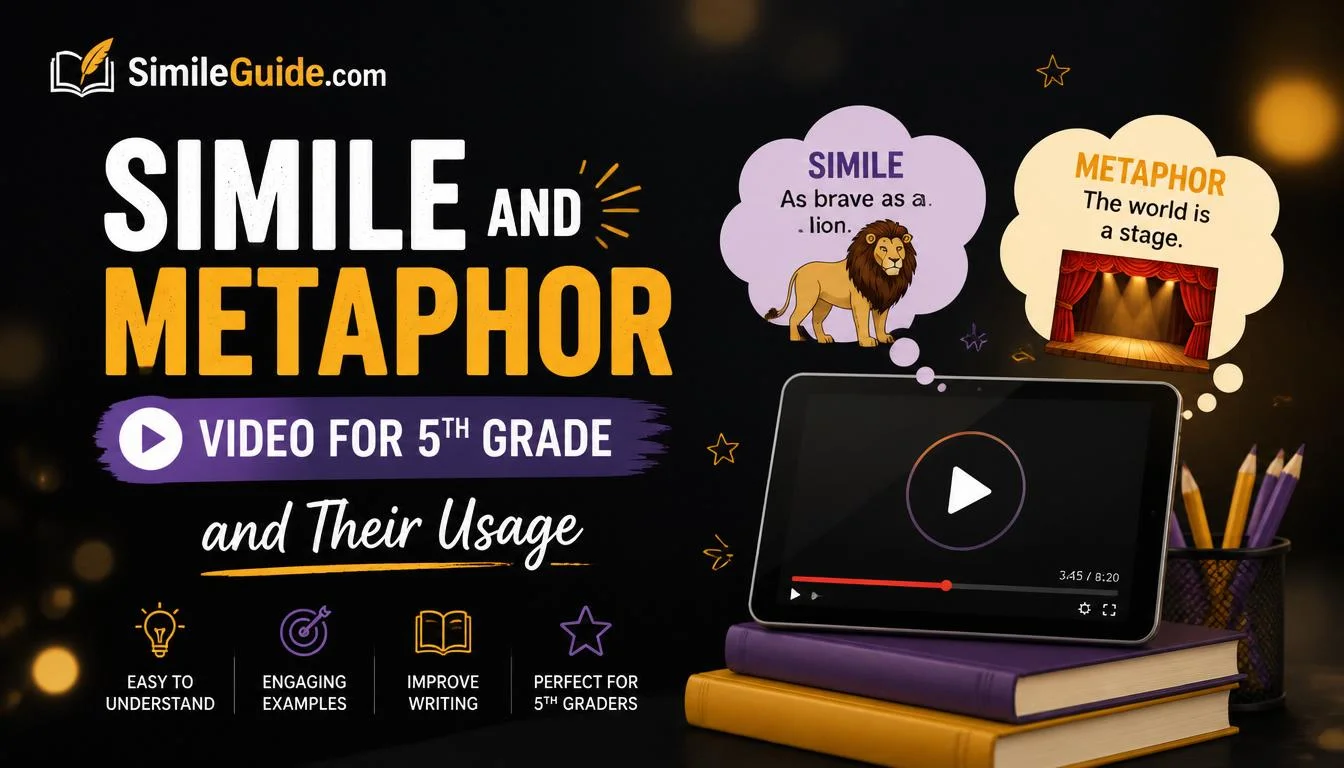
Learning figurative language can be exciting, especially when students use a simile and metaphor video for 5th grade to see examples in action. Instead of memorizing definitions, children can watch characters, stories, and animations that demonstrate how similes and metaphors make writing more colorful and engaging.
Imagine describing a fast runner as “as quick as a cheetah” or saying “time is a thief.” These expressions help readers create vivid mental pictures. A good simile and metaphor video for 5th grade turns these ideas into fun lessons that students can easily remember and use in their own writing.
Whether you’re a student, teacher, parent, or young writer, this guide explains everything you need to know about similes and metaphors in simple language. Updated for 2026, it includes examples, comparisons, practical tips, and a large collection of figurative language examples.
What Is a Simile and Metaphor Video for 5th Grade?
A simile and metaphor video for 5th grade is an educational video designed to teach students how similes and metaphors work.
These videos often use:
- Cartoons
- Animations
- Songs
- Stories
- Classroom examples
- Interactive quizzes
The goal is to help students understand figurative language in a way that is fun and easy to remember.
What Is a Simile?
A simile compares two different things using the words “like” or “as.”
Examples:
- As busy as a bee
- Like a shining star
- As soft as a pillow
What Is a Metaphor?
A metaphor compares two things without using “like” or “as.”
Examples:
- The classroom was a zoo.
- Her smile is sunshine.
- Time is a thief.
How Similes and Metaphors Work
Similes and metaphors help readers imagine ideas more clearly.
Instead of saying:
The car was fast.
You could write:
The car was as fast as lightning.
Or:
The car was a rocket on wheels.
Both descriptions create stronger images in the reader’s mind.
In everyday conversations, people often use similes and metaphors to express feelings, tell stories, and make descriptions more interesting.
Why 5th Grade Students Learn Similes and Metaphors
Students learn figurative language because it helps them:
- Improve reading comprehension
- Write more creatively
- Understand poems and stories
- Express emotions clearly
- Develop stronger vocabulary skills
From real-life writing experience, students who practice similes and metaphors often become more confident writers because they learn how to make ordinary descriptions more vivid.
Examples of Similes and Metaphors in Everyday Life
Everyday Similes
- As cold as ice
- As brave as a lion
- As light as a feather
- Like a fish out of water
- As quiet as a mouse
Everyday Metaphors
- The world is a stage.
- My backpack is a mountain of homework.
- His voice is music.
- The city never sleeps.
- Life is a journey.
These expressions appear in conversations, books, movies, songs, and social media posts every day.
Famous and Popular Examples
Many famous authors use similes and metaphors to create memorable writing.
Popular Similes
- Busy as a bee
- Strong as an ox
- Bright as the sun
- Cool as a cucumber
- Sharp as a knife
Popular Metaphors
- Time is money
- Knowledge is power
- The classroom was a circus
- The snow was a white blanket
- Her heart was stone
These examples help readers understand ideas through comparison.
Simile vs Metaphor
| Feature | Simile | Metaphor |
|---|---|---|
| Comparison | Yes | Yes |
| Uses “like” or “as” | Yes | No |
| Direct comparison | No | Yes |
| Example | As brave as a lion | He is a lion |
| Difficulty | Easier to identify | Slightly more advanced |
Quick Trick
If you see like or as, it is probably a simile.
If one thing is described as another thing directly, it is probably a metaphor.
How to Use Similes and Metaphors
Step 1: Choose a Subject
Think about what you want to describe.
Example:
- A friend
- A pet
- A storm
- A teacher
Step 2: Think of a Similar Object
Ask yourself:
“What does this remind me of?”
Step 3: Create the Comparison
Simile:
The puppy was as playful as a clown.
Metaphor:
The puppy was a tiny clown.
Step 4: Check for Clarity
Make sure your comparison helps readers understand the idea better.
40 Simile and Metaphor Examples for 5th Grade
Similes
1. As busy as a bee
Meaning: Very active.
Example: She was as busy as a bee preparing for the school fair.
2. As brave as a lion
Meaning: Courageous.
Example: He was as brave as a lion during the performance.
3. As light as a feather
Meaning: Very light.
Example: The balloon felt as light as a feather.
4. As quiet as a mouse
Meaning: Very silent.
Example: The students became as quiet as a mouse.
5. As fast as lightning
Meaning: Extremely fast.
Example: The runner moved as fast as lightning.
6. As cold as ice
Meaning: Very cold.
Example: The water was as cold as ice.
7. As sweet as honey
Meaning: Very kind.
Example: Her words were as sweet as honey.
8. As bright as the sun
Meaning: Very bright.
Example: His smile was as bright as the sun.
9. As tall as a tree
Meaning: Very tall.
Example: The basketball player seemed as tall as a tree.
10. As gentle as a lamb
Meaning: Very gentle.
Example: The puppy was as gentle as a lamb.
11. Like a rocket
Meaning: Very fast.
Example: The bike shot forward like a rocket.
12. Like a fish out of water
Meaning: Uncomfortable.
Example: He felt like a fish out of water.
13. Like a shining star
Meaning: Outstanding.
Example: She performed like a shining star.
14. Like a sponge
Meaning: Learns quickly.
Example: The student absorbed knowledge like a sponge.
15. Like a tornado
Meaning: Full of energy.
Example: The toddler moved through the room like a tornado.
16. As smooth as silk
Example: The fabric felt as smooth as silk.
17. As strong as an ox
Example: He carried the boxes as strong as an ox.
18. As happy as a clam
Example: She was as happy as a clam on vacation.
19. As clear as crystal
Example: The instructions were as clear as crystal.
20. As fresh as a daisy
Example: He looked as fresh as a daisy.
Metaphors
21. Time is a thief
Meaning: Time passes quickly.
Example: Time is a thief that steals our moments.
22. The classroom was a zoo
Meaning: Very noisy.
Example: The classroom was a zoo before the teacher arrived.
23. Her smile was sunshine
Meaning: Bright and cheerful.
Example: Her smile was sunshine on a gloomy day.
24. The snow was a blanket
Meaning: Covered everything.
Example: The snow was a blanket over the town.
25. Life is a journey
Meaning: Life has many experiences.
Example: Life is a journey filled with lessons.
26. The moon was a lantern
Example: The moon was a lantern in the night sky.
27. His brain is a computer
Example: His brain is a computer that remembers everything.
28. The clouds were cotton
Example: The clouds were cotton floating overhead.
29. My room is a disaster zone
Example: My room is a disaster zone after the weekend.
30. The world is a stage
Example: The world is a stage where everyone plays a role.
31. The test was a mountain
Example: The test was a mountain to climb.
32. The internet is an ocean
Example: The internet is an ocean of information.
33. Her voice is music
Example: Her voice is music to my ears.
34. The city is a jungle
Example: The city is a jungle full of activity.
35. His heart is gold
Example: His heart is gold because he always helps others.
36. Ideas are seeds
Example: Ideas are seeds that grow into projects.
37. Books are windows
Example: Books are windows to new worlds.
38. Friendship is glue
Example: Friendship is glue that keeps people together.
39. The classroom is a family
Example: The classroom is a family that learns together.
40. Dreams are stars
Example: Dreams are stars guiding our future.
Using Similes and Metaphors in Writing
Essays
Use figurative language to make descriptions stronger.
Example:
The playground was a sea of laughter.
Poetry
Poems often rely on similes and metaphors to create imagery.
Social Media Captions
Example:
Chasing dreams like a rocket.
Stories
Characters and settings become more memorable through creative comparisons.
Common Mistakes People Make With Similes and Metaphors
Mixing Similes and Metaphors Incorrectly
Keep comparisons clear and logical.
Using Too Many Comparisons
Too many similes or metaphors can confuse readers.
Choosing Unclear Comparisons
Readers should immediately understand the connection.
Repeating Clichés Excessively
Popular phrases are useful, but original comparisons make writing stand out.
Forgetting the Meaning
Always make sure the figurative language supports your message.
Tips for Learning Through Videos
A good simile and metaphor video for 5th grade should include:
- Visual examples
- Simple definitions
- Practice questions
- Fun animations
- Student-friendly language
- Real-world examples
Watching educational videos alongside reading and writing activities can improve understanding much faster.
Related Topics to Explore
You may also enjoy learning about:
- Personification
- Hyperbole
- Idioms
- Imagery
- Alliteration
- Onomatopoeia
- Figurative language
- Creative writing techniques
These topics work well alongside similes and metaphors.
Frequently Asked Questions
What is the difference between a simile and a metaphor?
A simile uses like or as to compare things, while a metaphor makes a direct comparison without those words.
Why do 5th graders learn similes and metaphors?
They help students improve reading, writing, creativity, and understanding of literature.
Can a sentence contain both a simile and a metaphor?
Yes. Writers sometimes use both, but each comparison should remain clear.
Are similes and metaphors used in everyday conversation?
Absolutely. People use them regularly to describe feelings, situations, and experiences.
How can students get better at using similes and metaphors?
Practice reading stories, watching educational videos, and creating original comparisons every day.
Conclusion
A simile and metaphor video for 5th grade can make figurative language much easier and more enjoyable to learn. By combining visual examples, storytelling, and practice activities, students quickly understand how comparisons make writing more vivid and meaningful.
Remember that similes use “like” or “as,” while metaphors make direct comparisons. Both tools help readers imagine ideas more clearly and add creativity to writing.
As you continue learning, try creating your own similes and metaphors in essays, poems, stories, captions, and daily conversations. With regular practice, you’ll discover that figurative language can turn ordinary writing into something memorable and exciting.
DISCOVER MORE ARTICLES
Simile for Tornado: 45 Powerful Examples and Meanings 2026
Creative Simile for Good Food to Make Writing More Flavorful 2026
Simile for Crying Eyes: 40 Emotional Examples for Writers 2026
