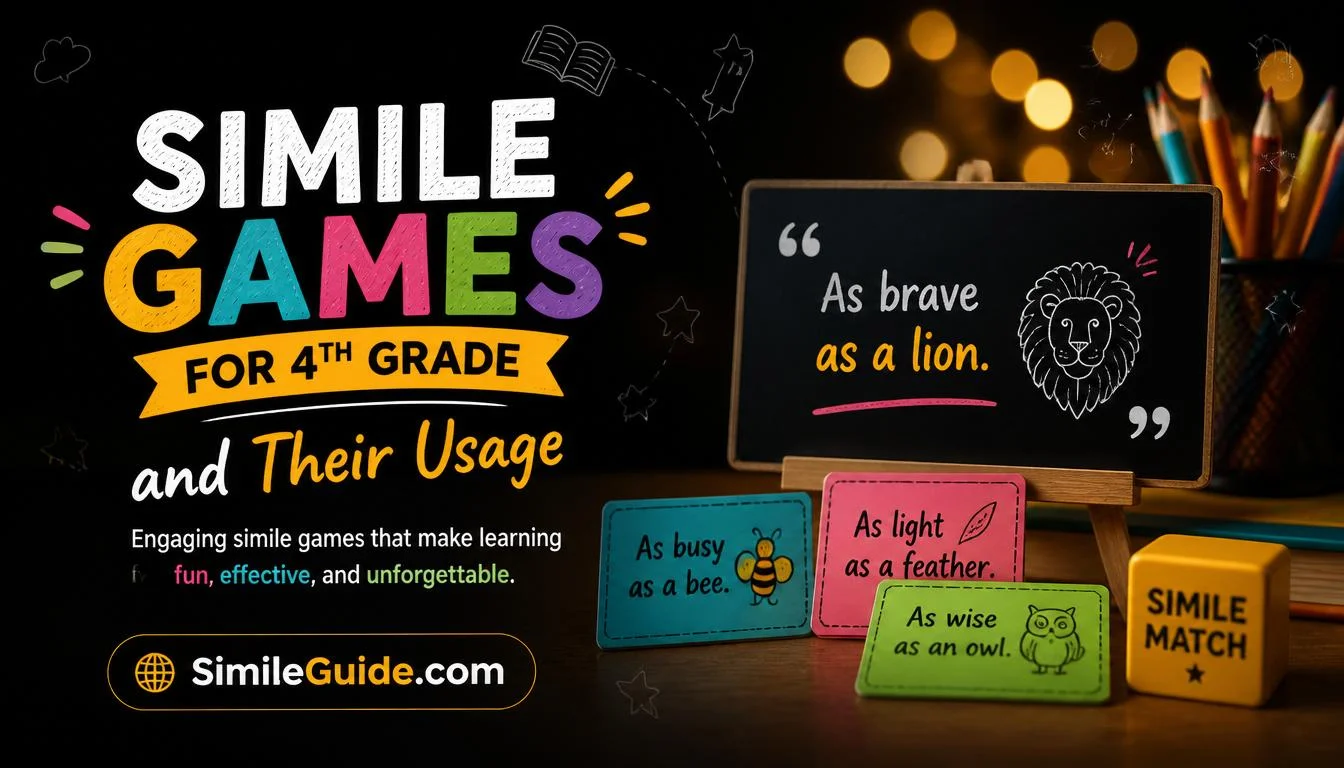
Learning similes doesn’t have to be boring. The best way to help children understand figurative language is through simile games for 4th grade that are fun, interactive, and easy to play. Instead of memorizing definitions, students can discover how similes work by solving puzzles, matching comparisons, acting out clues, and creating their own creative sentences.
Whether you’re a teacher planning an English lesson, a parent helping with homework, or a student practicing figurative language, simile games make learning enjoyable. Updated for 2026, this guide shares engaging activities, classroom ideas, and practical tips to help fourth-grade learners master similes with confidence.
What Are Simile Games for 4th Grade?
Definition in Simple Words
Simile games for 4th grade are fun learning activities that teach students how to recognize, understand, and create similes. A simile compares two different things using the words “like” or “as.”
For example:
- The lion was as brave as a superhero.
- The baby slept like a log.
Games help students practice these comparisons in an exciting way instead of simply reading definitions from a textbook.
How Do Simile Games for 4th Grade Work?
Learning Through Play
Most simile games encourage students to:
- Identify similes in sentences.
- Match two related ideas.
- Complete unfinished comparisons.
- Write original similes.
- Work in pairs or teams.
- Think creatively while learning grammar.
From real-life writing and teaching experience, students remember figurative language much better when they actively participate in games instead of only completing worksheets.
How Are Simile Games Used?
Common Classroom Activities
Teachers often use simile games during:
- English lessons
- Reading centers
- Writing workshops
- Vocabulary practice
- Homework review
- Group competitions
- Online learning
- Homeschool lessons
In everyday conversations, people often use similes without realizing it. Games help children notice these comparisons and use them naturally in their own speaking and writing.
Examples of Simile Games in Everyday Learning
In the Classroom
Students work in groups to match two halves of a simile.
Example:
As busy as…
Students choose:
- a bee ✅
- a turtle
- a pillow
This helps children understand common comparisons.
At Home
Parents can ask children to finish sentences like:
“The ice cream was as cold as…”
Children might answer:
- ice
- snow
- the freezer
This encourages creativity while reinforcing grammar.
Online Learning
Teachers can create digital quizzes where students identify whether a sentence contains a simile.
Example:
“The moon was like a glowing lantern.”
Students choose:
✅ Simile
Popular Simile Games for 4th Grade
Some classroom favorites include:
- Simile Bingo
- Simile Memory Match
- Simile Charades
- Simile Scavenger Hunt
- Roll-a-Simile Dice Game
- Simile Puzzle Race
- Complete the Simile
- Simile Card Match
- Guess the Simile
- Simile Writing Challenge
These activities make grammar lessons enjoyable while improving reading and writing skills.
Simile Games vs. Other Figurative Language Activities
| Simile Games | Other Activities |
|---|---|
| Focus on similes only | May include metaphors, idioms, and personification |
| Easy for beginners | Sometimes more challenging |
| Interactive and playful | Often worksheet-based |
| Encourages teamwork | May be completed individually |
| Improves creative writing | Focuses on multiple language skills |
Simile games are especially useful for fourth-grade students because they combine learning with fun.
How to Create Your Own Simile Games
Step 1: Choose a Theme
Examples:
- Animals
- Weather
- Food
- School
- Sports
- Nature
- Holidays
Step 2: Write Simple Similes
Example:
As fast as a cheetah.
Step 3: Turn Them Into a Game
Ideas include:
- Matching cards
- Memory games
- Dice games
- Board games
- Quiz competitions
- Team races
Step 4: Encourage Students to Create Their Own
Ask children to invent new comparisons.
Example:
The clouds were like fluffy marshmallows.
Creative answers help students understand how similes work.
Tips for Teaching Similes to 4th Graders
- Keep instructions simple.
- Use colorful pictures.
- Practice with familiar objects.
- Reward creative answers.
- Play games in small groups.
- Read stories containing similes.
- Encourage students to explain their comparisons.
Short, interactive activities often keep fourth graders engaged longer than traditional grammar exercises.
Suggested Internal Links
For readers who want to explore more figurative language topics, consider linking to:
- Simile Examples for Students
- Simile vs. Metaphor
- Metaphor Activities for Kids
- Figurative Language Worksheets
- Simile Sentences for Grade 4
- Creative Writing Prompts for Children
- Personification Examples
1. Simile Bingo
How it Works: Students mark similes on their bingo cards as the teacher reads them aloud.
This game improves listening and recognition skills.
2. Simile Memory Match
How it Works: Match the beginning of a simile with its correct ending.
Students strengthen memory while learning common comparisons.
3. Simile Charades
How it Works: Students act out a simile while classmates guess it.
This activity builds confidence and speaking skills.
4. Complete the Simile
How it Works: Finish sentences like “As quiet as ____.”
Children practice creating meaningful comparisons.
5. Roll-a-Simile Dice Game
How it Works: Roll a picture die and create a simile using the object shown.
Every roll inspires a new creative sentence.
6. Simile Scavenger Hunt
How it Works: Find similes hidden around the classroom.
Students learn while moving and exploring.
7. Guess the Simile
How it Works: The teacher reads clues, and students guess the complete simile.
It develops critical thinking skills.
8. Simile Card Match
How it Works: Match picture cards with the correct simile.
This activity strengthens visual learning.
9. Simile Puzzle Race
How it Works: Assemble puzzle pieces to complete similes.
Teams compete to finish first.
10. Build-a-Simile
How it Works: Choose nouns and adjectives to create original similes.
Students improve creativity and sentence-building skills.
11. Simile Relay Race
How it Works: Teams race to complete similes on the board.
It combines movement with grammar practice.
12. Picture to Simile
How it Works: Look at a picture and write a matching simile.
Students connect images with descriptive language.
13. Simile Sorting Game
How it Works: Sort sentences into similes and non-similes.
This reinforces understanding of figurative language.
14. Find the Missing Word
How it Works: Fill in the missing word to complete a simile.
Students learn common comparisons through context.
15. Simile Dominoes
How it Works: Connect domino cards that form complete similes.
This makes grammar practice fun and interactive.
16. Simile Spin Wheel
How it Works: Spin a wheel and create a simile using the selected word.
It encourages quick thinking.
17. Draw the Simile
How it Works: Draw a picture based on a simile.
Students improve comprehension through art.
18. Simile Quiz Show
How it Works: Answer simile questions in a classroom quiz competition.
This adds excitement to review lessons.
19. Simile Story Challenge
How it Works: Write a short story using at least three similes.
Students practice applying figurative language naturally.
20. Partner Simile Match
How it Works: Work with a partner to match simile halves.
This encourages teamwork and discussion.
21. Simile Sentence Builder
How it Works: Arrange word cards to create complete simile sentences.
It strengthens grammar and sentence structure.
22. Around-the-Room Similes
How it Works: Walk around the classroom completing simile stations.
Students stay active while learning.
23. Simile Flashcards
How it Works: Read a flashcard and explain its meaning.
This builds vocabulary and confidence.
24. True or False Similes
How it Works: Decide whether a sentence contains a simile.
Students practice identifying figurative language.
25. Create Your Own Simile Contest
How it Works: Students invent original similes and share them with the class.
This activity rewards imagination and creative writing.
26. Simile Board Game
How it Works: Move around the board by answering simile questions correctly.
Students review figurative language while enjoying friendly competition.
27. Simile Treasure Hunt
How it Works: Search for hidden simile cards around the classroom.
This game combines movement with learning.
28. Simile Balloon Pop
How it Works: Pop a balloon and complete the simile inside.
Students enjoy an exciting and interactive grammar activity.
29. Simile Word Search
How it Works: Find words that complete common similes.
This improves vocabulary and spelling.
30. Simile Crossword Puzzle
How it Works: Solve crossword clues using similes.
Students strengthen both language and thinking skills.
31. Simile Hot Potato
How it Works: Pass an object while music plays. When it stops, create a simile.
This encourages quick thinking and creativity.
32. Simile Wheel of Fortune
How it Works: Spin the wheel and make a simile using the chosen word.
Students practice building original comparisons.
33. Simile Sentence Race
How it Works: Teams compete to write the best simile first.
This builds speed, teamwork, and writing confidence.
34. Simile Cube Challenge
How it Works: Roll a cube with different topics and create a matching simile.
Each roll inspires a new comparison.
35. Simile Tic-Tac-Toe
How it Works: Answer a simile question correctly before placing your mark.
Students review grammar while playing a favorite game.
36. Simile Mystery Box
How it Works: Pick an object from the box and create a simile about it.
This activity encourages imagination.
37. Simile Fish Bowl
How it Works: Draw a word from a bowl and use it in a simile.
Students think creatively under time limits.
38. Simile Matching Relay
How it Works: Teams race to match simile beginnings with endings.
This improves recognition and teamwork.
39. Simile Sentence Hunt
How it Works: Find similes hidden in books or classroom posters.
Students discover figurative language in real texts.
40. Simile Drawing Contest
How it Works: Draw a picture that represents a simile.
Students connect art with language learning.
41. Simile Story Circle
How it Works: Each student adds one simile to a class story.
This builds collaboration and storytelling skills.
42. Simile Picture Bingo
How it Works: Match picture cards to the correct similes.
Visual learners benefit from image-based practice.
43. Simile Memory Chain
How it Works: Each student repeats previous similes and adds a new one.
This game strengthens memory and listening skills.
44. Simile Classroom Quiz
How it Works: Answer multiple-choice questions about similes.
Students review key concepts in a fun format.
45. Simile Word Relay
How it Works: Teams race to complete unfinished similes.
This encourages cooperation and fast thinking.
46. Simile Puzzle Builder
How it Works: Assemble puzzle pieces to form complete similes.
Students improve problem-solving skills while learning grammar.
47. Simile Escape Room
How it Works: Solve simile clues to unlock the next challenge.
This exciting activity keeps students fully engaged.
48. Simile Pass the Card
How it Works: Pass cards around and create a simile when the music stops.
Students practice speaking confidently.
49. Simile Digital Quiz
How it Works: Complete an online quiz with simile questions.
Perfect for classroom technology or homework.
50. Simile Talent Show
How it Works: Students perform short poems, stories, or speeches using similes.
This activity celebrates creativity while reinforcing figurative language.
Common Mistakes People Make
- Confusing similes with metaphors.
- Forgetting to use “like” or “as.”
- Choosing comparisons that don’t make sense.
- Repeating the same similes too often.
- Making comparisons that are too long or confusing.
Frequently Asked Questions
What are simile games for 4th grade?
They are fun classroom or home activities that teach children how to recognize, understand, and create similes through interactive learning.
Why are simile games important?
They make grammar lessons enjoyable, improve creative writing, and help students remember figurative language more easily.
Can parents use these games at home?
Yes. Most simile games require only paper, picture cards, or everyday household objects.
What is the best simile game for beginners?
Simile Bingo, Complete the Simile, and Memory Match are excellent choices because they are simple and engaging.
How often should students practice similes?
Even 10–15 minutes of practice each week can help students build confidence and improve their writing skills.
Conclusion
Simile games for 4th grade are one of the most effective ways to teach figurative language. By turning grammar lessons into interactive activities, children stay engaged while developing stronger reading, writing, and speaking skills.
From real-life writing experience, students learn best when they can play, explore, and create their own examples. Whether you’re a teacher planning classroom lessons or a parent supporting learning at home, these games make similes easy to understand and fun to use.
Encourage children to practice regularly, invent original comparisons, and use similes in essays, poems, stories, and everyday conversations. The more they play, the more confident they will become with figurative language.
DISCOVER MORE ARTICLES
Simile for Empty Space: Meaning, Uses and Examples 2026
50 Beautiful Simile for Rain Falling With Examples 2026
50 Simile Examples for Kindness with Meanings and Uses 2026
